
I Am: the alternative of more than 30 companies against spam
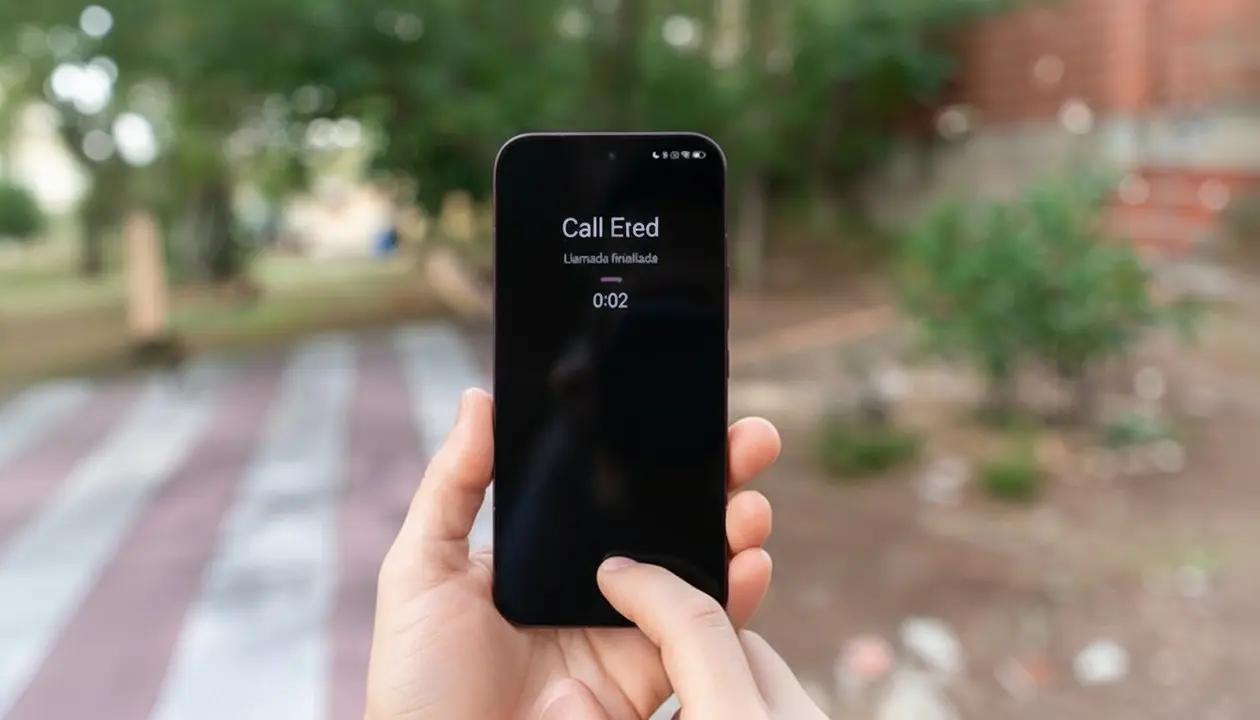

Soy Yo allows verifying the identity of a phone number when the calling company has registered on the platform. The information, published by Xataka Móvil on October 15, 2026, positions this Adigital tool as an alternative for checking unwanted commercial calls. It does not prevent the phone from ringing by itself, but it can provide a clue before answering or returning the call.
What Soy Yo offers against spam
Why might this platform interest you?
For those receiving unknown calls, the problem is not always distinguishing a sales call from a personal conversation. Often, it’s not even known who is on the other side. Soy Yo proposes a simple check: enter the number displayed on the screen and see if the company has previously identified itself.
The platform was introduced by Adigital, the Spanish Association for the Digital Economy responsible for the Robinson List and the Confianza Online seal. According to the source, it already has more than 30 companies from various sectors on board. That number does not mean all commercial numbers are included but does show that several companies have chosen to participate.
The approach is different from the Robinson List. The Robinson List aims for citizens to reduce certain commercial communications by signing up; Soy Yo serves to check the identity of a specific number. These are tools related to the same problem but operate at different moments.
What limitation does the query have?
The response only appears if the company has previously registered on the platform. A number not listed there is not automatically identified as fraudulent, legitimate, or commercial; there simply will be no confirmation available on that service. That nuance considerably changes the interpretation of the result.
There is also a practical difficulty. If the call is incoming, the user must momentarily leave that screen, open the website, enter the number, and wait for the result. During those seconds, the call may end. Therefore, the tool may be more useful when reviewing a missed call than trying to investigate while the phone is still ringing.
The source also notes that the platform has “visible seams.” Simply put, it still does not cover all phone traffic and depends on companies cooperating. Presenting it as a complete database would lead to a misleading expectation.
How to check a number on Soy Yo
Steps to verify who called you
The described procedure is straightforward and does not require interpreting technical codes. The query is made from the webpage provided by the platform, but the source does not specify a particular name for the search button or an additional path within the page.
- Open the official website of Soy Yo.
- Locate the field designated for the phone number.
- Enter the number shown on the incoming or missed call.
- Review the identity displayed by the platform, if that company has registered previously.
- Compare the result with the context of the call before returning it or providing information.
This last step requires common sense. The appearance of a registered company does not by itself prove that every specific call is legitimate; likewise, no results do not prove it is a scam. The tool provides a signal, not an absolute guarantee.
How to interpret the result?
If Soy Yo identifies the company, the user obtains a reference about who is behind the queried number. If it does not identify it, the result should be understood as a lack of information on that platform, not as a definitive classification of the call.
It is advisable to maintain a cautious attitude toward any commercial communication. Do not provide personal data, SMS codes, or banking information just because the number appears associated with a company. This recommendation does not depend on a figure or a specific version: it responds to the tool’s own limitation.
The query can also be useful for reviewing missed calls. The source points out that, due to the time needed to open the website and search the number, this situation might be more realistic than identifying the call in real time. Thus, the service fits better as a subsequent check than as an automatic phone filter.
The 400 prefix and what it may change
What obligation does the 400 prefix introduce?
The 400 prefix identifies the numeric range companies must use when making commercial calls, according to the source’s information. If a company does not use that range when required, operators will be obligated to block the call.
The measure arrives just hours after Soy Yo’s launch and is part of a joint effort involving the Government, operators, manufacturers, and associations. For the user, the idea is simple: to have a more visible signal about the commercial nature of a call.
There is an important exception. Customer service communications may continue using their usual phone numbers. Therefore, the 400 prefix will not turn every call not starting with those numbers into spam, nor will it automatically identify all commercial communications.
Will it be enough to end unwanted calls?
There is no definitive answer in the available information. A study by Hiya cited by Xataka Móvil indicates that we receive an average of seven spam calls per week. This data helps measure the problem: although several barriers have been proposed, the nuisance remains quite considerable for many people.
The source’s own assessment expresses doubts that the 400 prefix will be the ultimate solution, though it considers it one of the better-proposed ideas. From a practical perspective, the combination seems more useful than a single tool: the prefix can provide an initial signal, and Soy Yo can help verify registered numbers.
To check if a call affects you, use this list:
- The company appears identified on Soy Yo: there is registered information, though you should assess the conversation’s content.
- The number does not appear: the platform does not have an identification for that query; it is not automatic proof of fraud.
- The call is commercial and does not use the 400 prefix: the source indicates operators must block it when the obligation applies.
- The call is related to customer service: it can use usual phone numbers, according to the described exception.
- You are asked for sensitive information: do not provide it without verifying the company’s identity by other means.
As additional prevention, keep your phone updated, occasionally review app permissions, and keep backups of relevant information. Enabling two-step authentication on accounts that offer it can also be useful, especially if a call attempts to obtain credentials or codes.
Seek professional help or contact the company directly via a channel you already know if the call includes threats, pressure to act immediately, requests for banking data, or contradictory messages. Soy Yo can guide the verification, but the safe decision remains not to share sensitive information with a doubtful identity.
Adigital’s alternative covers a specific need: knowing who may be calling. Its limits are also clear because it depends on registered companies and does not cover all numbers. Between Soy Yo, the Robinson List, and the 400 prefix, the user has more signals to filter calls, but none replaces caution when faced with an unexpected request.
Frequently Asked Questions
- What is Soy Yo?
- It is a free platform by Adigital that allows checking the identity of a phone number when the corresponding company has previously registered.
- Does Soy Yo block spam calls?
- No. The tool is for verifying the identity of some numbers. The source does not indicate it blocks calls or replaces phone filters.
- What happens if my number does not appear on Soy Yo?
- It means there is no identification available on that platform for that number. It does not by itself prove the call is fraudulent or legitimate.
- What is the 400 prefix?
- It is a numeric range companies must use in certain commercial calls. If they do not use it when required, operators must block the call.