Renault 5 Turbo 3E: 1,000 Reservations for a €160,000 Electric
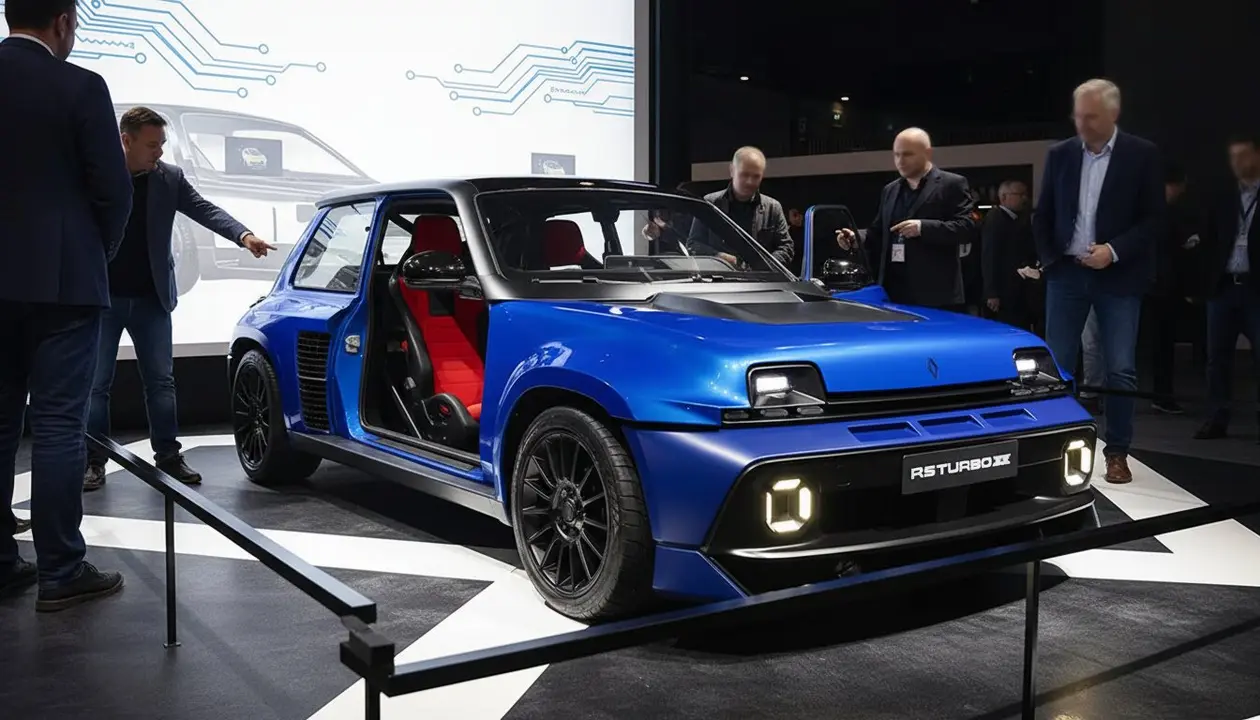

The Renault 5 Turbo 3E has already surpassed a thousand units reserved, although deliveries have not yet begun. The information provided places this model as one of Renault's most extreme electric projects: only 1,980 units will be produced, its starting price is around 160,000 euros, and the homologation process is still ongoing. For those following the evolution of the electric car, the takeaway is clear: this is not just about selling mobility, but a limited piece with experimental technology and a level of customization capable of driving up the cost.
An electric Renault 5 playing in a different league
Why does it matter that there are already more than 1,000 reservations?
It matters because the Renault 5 Turbo 3E has found buyers before being completely finished. Florent Ingargiola, product manager of the model, confirmed that Renault has already reserved more than half of the planned 1,980 units. Simply put: the market has responded to a very expensive, very limited car that is still pending completion of its homologation process.
The production figure also has a specific meaning. The 1,980 units refer to the year when the original Renault 5 Turbo appeared, so the modern series does not use the historic name as a mere commercial ornament. The number produced directly connects the electric project with that model from the 1980s.
The deposit required to enter the reservation program amounts to 50,000 euros. This amount is deducted later from the final price but forces the buyer to commit a large sum before receiving the vehicle. For a conventional customer, the entry barrier is obvious; for a collector, it works as part of the exclusive nature of the series.
An extreme reinterpretation, not a conventional sporty version
The similarity in name and aesthetic inspiration can lead to a mistaken interpretation. The Turbo 3E is not simply an electric Renault 5 with more power, but an almost independent project that Renault presents as a “mini-supercar.” This difference completely changes its position within the range.
The brand recovers the extreme philosophy of the original Renault 5 Turbo but replaces the mechanics of that era with electric motors. The result is a car designed around exclusivity, performance, and the possibility to configure each unit with an unusual level of customization.
And here emerges the first paradox: it shares a recognizable visual reference, but its price and concept distance it from the urban car with which it shares part of the name. The buyer is not only seeking mobility, but acquiring a very particular interpretation of Renault’s sporty history.
555 HP, two rear motors, and fast charging
What do its technical figures offer in practice?
The Renault 5 Turbo 3E combines two electric motors installed directly on the rear wheels with a maximum power of 555 HP. Rear-wheel drive maintains one of the essential traits of the historic model, while the electric system allows for acceleration from 0 to 100 km/h in less than 3.5 seconds.
The announced top speed is 270 km/h on circuit. This figure does not describe everyday use, and Renault does not present the car as a tool for regularly driving at that speed. Rather, it helps explain why the brand places it near the supercar concept and not alongside the normal Renault 5 versions.
The curb weight is close to 1,450 kilos. With 555 HP and rear-wheel drive, the power-to-weight ratio is one of the project’s central technical arguments. Still, the source does not provide measurements for overtaking, stability, comfort, interior noise, or behavior in city or highway conditions, so it would not be correct to attribute specific driving sensations that are not yet documented.
A 70 kWh Battery with an 800-volt Architecture
The battery is around 70 kWh and operates on an 800-volt electrical architecture. Under suitable conditions, fast charging allows going approximately from 15% to 80% in 15 minutes. This energy recovery capacity is especially striking in a car conceived as an electric sports car.
It’s important to put each figure in context. The source does not provide homologated range, electric consumption, trunk capacity, or charging times outside those suitable conditions. Therefore, the available data allows assessing the charging technology, but not calculating how many kilometers could be covered between charges or how much it would cost to use on typical trips.
Renault also uses the model as a test bench for in-wheel motors. François Provost explained that the brand could study this technology for other electric vehicles. The Turbo 3E, therefore, is not limited to producing 1,980 cars: it also serves to test a solution that could have potential in future models.
| Specification | Communicated data |
|---|---|
| Limited production | 1,980 units |
| Reservations | More than 1,000 units |
| Reservation deposit | 50,000 euros |
| Starting price | Around 160,000 euros, before options and customization |
| Power | 555 HP |
| Engine | Two electric motors on the rear wheels |
| Acceleration 0-100 km/h | Less than 3.5 seconds |
| Top speed | 270 km/h on circuit |
| Curb weight | Approximately 1,450 kilos |
| Battery | Around 70 kWh |
| Electrical architecture | 800 volts |
| Fast charging | From 15% to 80% in about 15 minutes, under suitable conditions |
Price, customization, and delivery schedule
Could it exceed 350,000 euros?
Yes. The starting price is around 160,000 euros, but that figure only marks the beginning. François Provost explained that certain units configured by their owners could exceed 350,000 euros after going through Renault’s customization program.
The difference between both amounts does not respond to a general price increase communicated for the entire range, but to the choice of finishes and individual configurations. This nuance is decisive for interpreting the car: not all units will necessarily have the same price, because the program allows each buyer to raise the final invoice.
From a market perspective, Renault is entering territory reserved for very high-priced sports cars, but it does so with a much smaller series and an identity based on the history of the Renault 5 Turbo. The reservation figure suggests there is demand for this combination, even when the product is not yet delivered.
When will the first units arrive?
The first deliveries are scheduled for 2028. Renault initially planned to start in 2027, but the complexity of the customization program has pushed back the schedule. The car also continues its homologation process, so buyers must assume a prolonged wait before receiving it.
For those valuing a reservation, the timeframe is not a minor detail. They advance 50,000 euros, buy a vehicle still in the finalization phase, and the delivery is set for 2028. Exclusivity here has a financial and also a temporal cost.
- What plays in its favor: limited production of 1,980 units, 555 HP power, 800-volt technology, two rear motors, and a very broad customization program.
- What it demands from the buyer: a 50,000-euro deposit, an initial price close to 160,000 euros, a possible bill exceeding 350,000 euros, and a wait until 2028.
- What is still not confirmed in the source: homologated range, electric consumption, performance outside the circuit, full equipment, and real road behavior.
For the buyer of an electric car for daily use, the Renault 5 Turbo 3E does not fit by price, availability, or approach. For a collector interested in a limited piece, the formula is different: numbered production, the 1980 reference, and customization form a package difficult to compare with a conventional model.
The Renault 5 Turbo 3E is a bet on image, exclusivity, and experimental technology, not a rational high-volume electric. Its more than 1,000 reservations show that price has not stopped its first customers, but the 2028 schedule and possible bill over 350,000 euros oblige evaluating the purchase as a special acquisition. For the rest, its greatest interest will be in the technology Renault may transfer to future electric models.
Frequently Asked Questions
- How many units of the Renault 5 Turbo 3E will be produced?
- Renault plans to produce 1,980 units. The figure refers to the year the original Renault 5 Turbo appeared.
- How much does it cost to reserve the Renault 5 Turbo 3E?
- The reservation deposit is 50,000 euros. This amount is later deducted from the vehicle's final price.
- What is the price of the Renault 5 Turbo 3E?
- It starts at around 160,000 euros before options and customization. Some configurations could exceed 350,000 euros.
- When will the first units be delivered?
- The first deliveries are scheduled for 2028. The schedule has been delayed due to the complexity of the customization program.