Cádiz gathers 900 experts: the invisible challenge of Micro 2026
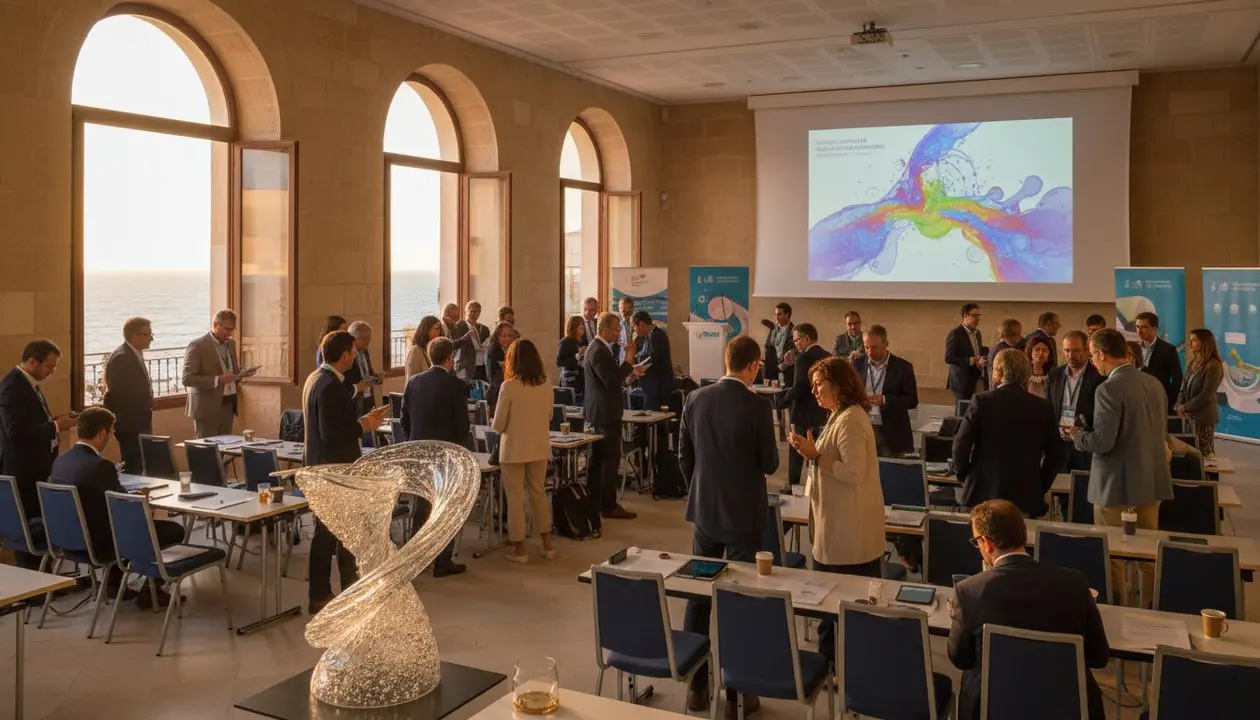
Micro 2026 will bring together nearly 900 participants in Cádiz from October 12 to 16 to analyze plastic pollution, from visible waste to microplastics and nanoplastics. The Conference Center will be the meeting point for researchers, technicians, students, public officials, and social entities for five days. For the city, the congress means more than just a scientific event: it connects internationally relevant research with a territory closely linked to the sea.
Cádiz becomes a meeting point to study plastic
Why does this congress matter to Cádiz?
The answer lies in the city’s own relationship with the ocean. Micro 2026 will bring a debate to Cádiz that usually appears associated with beaches and visible debris but is also fought on a much smaller scale and far harder to perceive. **Plastic pollution does not end when a bottle disappears from the shore**: the problem includes microscopic particles whose presence poses new challenges for research and environmental monitoring.
The University of Cádiz participates in the organization through Professor Carmen Morales-Caselles, a researcher linked to the Marine Research University Institute (Inmar). The institution is part of the international team responsible for the conference, which will gather representatives from universities, research centers, and other entities from six countries.
The figure of nearly 900 participants clearly measures the scope of the event. It is not a meeting limited to a single specialty but a space where scientific, technical, institutional, and social profiles will coincide. This mix is especially relevant because plastic pollution cannot be solved from a single laboratory or with just one tool.
What will be studied at Micro 2026?
The congress will address the environmental effects of larger plastic waste and much smaller particles. Among these are microplastics and nanoplastics, whose presence raises questions about how to detect pollution, how to track its evolution, and which preventive measures can be applied.
The program will combine scientific sessions, specialized workshops, and dialogue spaces. It will also bring research results closer to debates related to prevention, monitoring, management, and public policy development. In other words: the conversation will not stop at the data, although data will be the starting point.
The organization has framed Micro 2026 under the motto “Bridges”. The idea is to connect scientific disciplines and relate research to other areas of society. In Cádiz, this approach fits a city that will not only host specialists but also open some activities to schools, groups, and local entities.
From visible waste to particles barely seen
What is the difference between microplastics and nanoplastics?
They are plastic particles much smaller than the debris usually seen on a beach, and their presence adds complexity to the study of pollution. The source does not provide a fixed numerical classification here but does indicate that microplastics and nanoplastics pose new challenges to investigate, monitor, and prevent the problem.
This scale changes how environmental impact is observed. A waste accumulation on the coast can be located with the naked eye; a microscopic particle requires specific analysis and monitoring methods. For this reason, the conference will bring together people dedicated to both research and management of this issue.
The difference also influences public conversation. Images of beaches full of plastics help identify the problem but only tell part of the story. **Micro 2026 will focus on what is not always seen**, a task less photogenic and far more demanding (science rarely fits on a postcard).
Why is it necessary to connect science and public policy?
Because studying pollution is not enough if results do not reach spaces where prevention, monitoring, and management measures are designed. Micro 2026 seeks to bring scientific knowledge closer to these debates, with participation from public policy makers, non-governmental organizations, and other involved sectors.
The event format responds to that need. Scientific sessions will allow sharing results; workshops will address specialized issues; and dialogue spaces will seek to facilitate new international collaborations. Each part fulfills a different function, but all point in the same direction: for knowledge to be translated into shared conversations and responses.
For the Cádiz reader, the most direct consequence will be having a segment of the international community studying this environmental challenge in the city for five days. The congress does not promise an immediate solution nor present a single formula. It offers something more concrete: a place to share evidence, questions, and ways forward.
A congress that will extend beyond the Conference Center
What public activities will accompany the scientific sessions?
Micro 2026 will include artistic and theatrical proposals related to plastic pollution, the ocean, and people’s connection to their environment. One will be a theatrical performance constructed from contributions by the participants themselves, so the reflections shared during the event will also have a stage outlet.
The program thus offers another way to approach scientific content. Not everything will pass through a lecture or a workshop: art will serve as a way to bring questions about plastic and the ocean to broader audiences. And here lies the interesting twist: a specialized conference will also try to speak outside its rooms.
Additionally, schools, groups, and local entities will participate in various initiatives linked to the congress. Some of these activities will allow meetings between international specialists and Cádiz citizens, taking the debate out of academic spaces and into participatory settings.
What does it mean that Cádiz hosts Micro for the first time?
Cádiz will be the first host of this conference in the city. Micro was born in 2016 thanks to collaboration between UNESCO’s World Network of Biosphere Reserves, represented by the Lanzarote Biosphere Reserve, and the international researcher network Marine Sciences for Society.
Since then, the biennial meeting has established itself as a space for scientific exchange based on open science and participation from various sectors of society. The previous edition was held in Lanzarote in 2024, and now the conference comes to a territory with an important research history in marine sciences.
The move to Cádiz, therefore, has a value beyond the venue. The city connects the international dimension of the event with an environment directly related to the sea. It also allows an event born from scientific networks and biosphere reserves to incorporate activities with schools, groups, and local entities.
The agenda will take place from October 12 to 16 at the Cádiz Conference Center, but the sought effects will not be limited to those facilities. The stated goal is that scientific advances contribute to generating shared conversations and responses to a global environmental problem. **The conference wants to build bridges between those who research, those who make decisions, and those who live by the sea.**
Nearly **900 participants**, five days of sessions, and a venue linked to the ocean make **Cádiz** the international center of Micro 2026. The congress will address both visible debris and microplastics and nanoplastics, combining science, workshops, dialogue, and cultural activities. The key will be that this knowledge does not stay inside the Conference Center but also reaches the citizens.
Frequently Asked Questions
- When is Micro 2026 held in Cádiz?
- Micro 2026 will be held from October 12 to 16 at the Cádiz Conference Center. The conference will bring together nearly 900 participants from different countries over five days.
- What topics will Micro 2026 address?
- The congress will analyze plastic pollution, from larger debris to microplastics and nanoplastics. It will also cover prevention, monitoring, management, and public policies.
- Who organizes Micro 2026?
- The University of Cádiz participates in the organization through Professor Carmen Morales-Caselles, a researcher linked to the Marine Research University Institute. The international team includes entities from six countries.
- Will there be activities for the citizens of Cádiz?
- Yes. The program includes artistic and theatrical proposals, as well as initiatives with schools, groups, and local entities. Some activities aim to take the scientific debate outside academic spaces.