
The astonishing 2,000 km drone being developed by France and Morocco
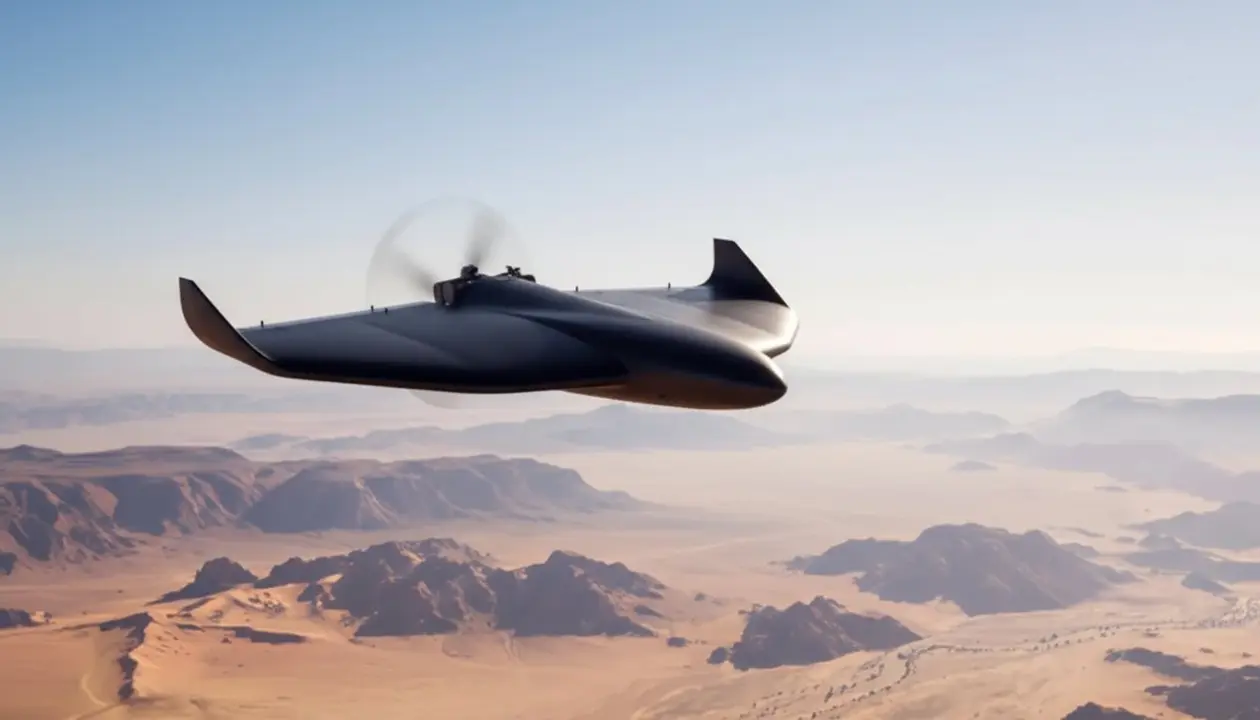

IRIFI is a long-range autonomous drone that France and Morocco plan to develop to reach targets located up to 2,000 kilometers away. This is according to information published on October 7, 2026, about the announcement from Harmattan AI and Morocco. The project is important for two reasons: it extends the planned range of attacks far from the front and proposes manufacturing its main components on Moroccan territory.
What is IRIFI and What Capability Does it Announce
How Far Could the New Drone Reach?
IRIFI has been presented as an autonomous and sovereign long-range attack system. The central figure is up to 2,000 kilometers, a distance that places its possible missions far from the front line. The source provides no data on speed, size, flight endurance, or entry into service date, so those details cannot be confirmed.
The concept fits with what is called deep strike: a long-range action against areas located inside enemy territory, far from the front line. According to available information, this type of operation is usually aimed at critical infrastructure such as logistics centers, ammunition depots, air bases, or industrial facilities.
The described military logic is clear: reduce the adversary’s capacity for retaliation. Plainly put, the goal would not be to act only against units fighting at the front but also to affect the resources that allow sustaining operations. This is the essential difference of IRIFI compared to a drone designed for close surveillance or immediate support.
What Does It Mean That It Is Autonomous?
Autonomy does not mean the system chooses any target by itself. Before launch, commanders designate authorized targets and set mission parameters. Once approved and launched, IRIFI executes the mission autonomously within those defined limits.
Put simply, military personnel would establish beforehand what the system may do and under which conditions. Then, the drone would process necessary information during the flight without requiring constant intervention for every movement. The source does not specify what additional controls would exist or how the mission would be supervised once started.
The term wear architecture appears associated with IRIFI’s design. In this context, it describes a system conceived for rapid, agile, and large-scale deployment. Available information does not clarify how many units would be produced, their cost, or the operational duration of each.
How Its Guidance System Works
Can It Operate Without GNSS?
Yes, IRIFI’s integrated navigation system does not depend on GNSS, that is, the constellation of satellites used to determine position. This feature is relevant because the project does not rely solely on receiving external signals to calculate its path. The source does not identify what specific technology replaces GNSS nor explain how the system would behave in each possible interference scenario.
The guidance is combined with a terminal optical reference. Terminal optical guidance is a method that uses visual information during the final phase of the route to direct the system toward the authorized target. The combination of both elements would allow, according to the project description, navigating, processing information, and achieving metric accuracy even during low-altitude flights.
Metric accuracy indicates the system is designed to approach the target with a margin expressed in meters. It does not equate to knowing the exact outcome of a mission nor does it allow deducing the type of payload it will carry. In fact, one of the most relevant data remains unavailable: the payload has not been revealed.
What Elements Will Form the System?
The announced architecture includes several components: the autonomous system itself, an unspecified payload, a mobile launch vehicle with container, and a structure prepared for wear. The presence of a mobile vehicle points to a solution that would not depend on a fixed installation for each launch, although the source does not detail its technical characteristics.
The container and mobility are part of the rapid deployment proposal. That combination would allow moving the system and preparing it for a mission without necessarily relying on permanent infrastructure at the launch site. Caution is advisable: the announcement describes a planned capability, not an already completed operation.
Comparison with missiles like the Tomahawk helps understand the type of mission IRIFI aims for. Until now, long-range strategic attacks have depended on sophisticated and costly missiles. The source presents them as very effective tools, although also linked to significant logistical infrastructure. Harmattan AI places its proposal within that same need to strike at range, without yet providing figures to compare costs or performance.
What Changes for Morocco and What Remains Unconfirmed
Where Will It Be Manufactured and Who Will Develop It?
For defense-interested readers, the most significant aspect is not only the announced range. It is also the intention that IRIFI’s key technological components be developed and produced in Morocco, primarily by Moroccan personnel. The project thus proposes a local industrial capacity, not only purchasing a finished system from a foreign company.
In June 2026, Harmattan AI and the Royal Armed Forces signed a strategic alliance based on three pillars. The first is establishing manufacturing capabilities in Morocco to produce autonomous defense systems. The second consists of creating a research and development center dedicated to artificial intelligence applied to defense systems.
The third pillar seeks collaboration with Moroccan institutions of higher education and research. The factory will be located near Casablanca. This data brings a concrete local dimension to the announcement: the project is not limited to a technical presentation but includes manufacturing, research, and academic cooperation within Morocco.
- Local manufacturing: production of autonomous defense systems in Morocco.
- Research: creation of a center dedicated to artificial intelligence applied to defense.
- Academic collaboration: participation of Moroccan higher education and research institutions.
- Planned location: a factory near Casablanca.
What Is Confirmed and What Remains Open?
The information confirms the IRIFI announcement, its planned range of up to 2,000 kilometers, autonomous operation within established parameters, and the combination of GNSS-independent navigation with terminal optical guidance. It also confirms the June 2026 alliance and the three associated industrial and academic pillars.
Several essential points remain open. The payload is unknown, no production figures have been communicated, the production schedule has not been indicated, nor have data on cost, speed, size, or flight duration been offered. The source also does not identify specific targets nor announce that IRIFI has been used in a real operation.
- Confirmed: development announced by Harmattan AI and Morocco.
- Confirmed: planned range of up to 2,000 kilometers.
- Confirmed: GNSS-independent navigation and terminal optical guidance.
- Not revealed: the payload.
- Not communicated: the schedule, cost, and number of units.
- Not indicated: use of IRIFI in a real operation.
The most prudent reading is also the most useful: IRIFI represents an announced capability, not a fully proven combat capability. Its interest lies in the combination of range, autonomy, local production, and mobile deployment. But until more data is known, any assessment of its concrete results must remain in the realm of projections.
IRIFI combines an announced range of 2,000 kilometers, autonomy limited by parameters set by commanders, and a guidance system that does not depend on GNSS. The alliance between Harmattan AI and Morocco adds an industrial commitment with a factory near Casablanca, research in artificial intelligence, and academic collaboration. The payload, schedule, and final performance have yet to be revealed.
Frequently Asked Questions
- What is the IRIFI drone?
- IRIFI is an autonomous and sovereign long-range attack system announced by Harmattan AI and Morocco. It is designed to reach targets up to 2,000 kilometers away, far from the front.
- Does IRIFI depend on GPS?
- The source indicates its navigation system does not depend on GNSS, the global navigation satellite system. It also incorporates terminal optical guidance for the final flight phase.
- What payload will IRIFI carry?
- IRIFI’s payload has not been revealed. Therefore, it is not possible to confirm what type of payload it will carry or compare its capacity with other systems.
- Where will the system be manufactured?
- The factory will be located near Casablanca. Harmattan AI states that key technological components will be developed and produced in Morocco, primarily with Moroccan personnel.