Urda and Adamuz: clear symptoms of a serious system failure almost normalized
Two railway accidents in the same year force us to look beyond the immediate causes. The underlying problem is the ability of those who manage critical infrastructure to anticipate risks, ensure safety, and take responsibility. Governing is not about allocating resources or winning elections: it is about making things work.
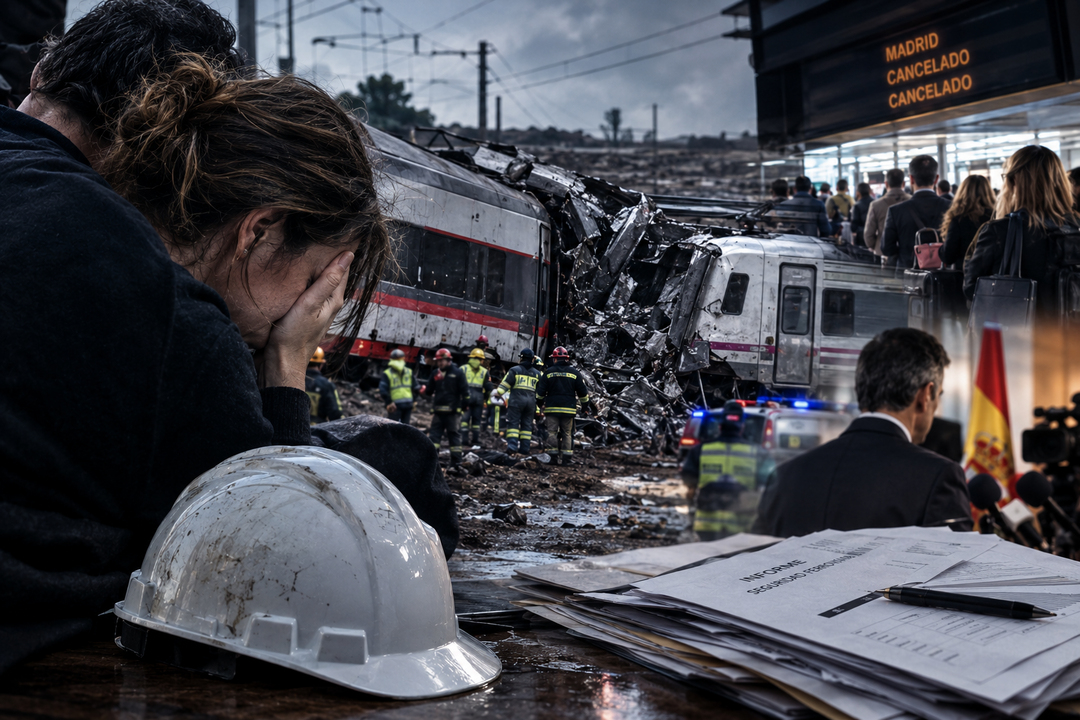

We have come to accept too many things that should be intolerable. That something fails, that a review does not detect a problem, that a warning arrives late, or that a risk is considered acceptable until its consequences become irreversible. Then comes the investigation, the cross-examination of statements, and the political defense of those who should provide explanations.
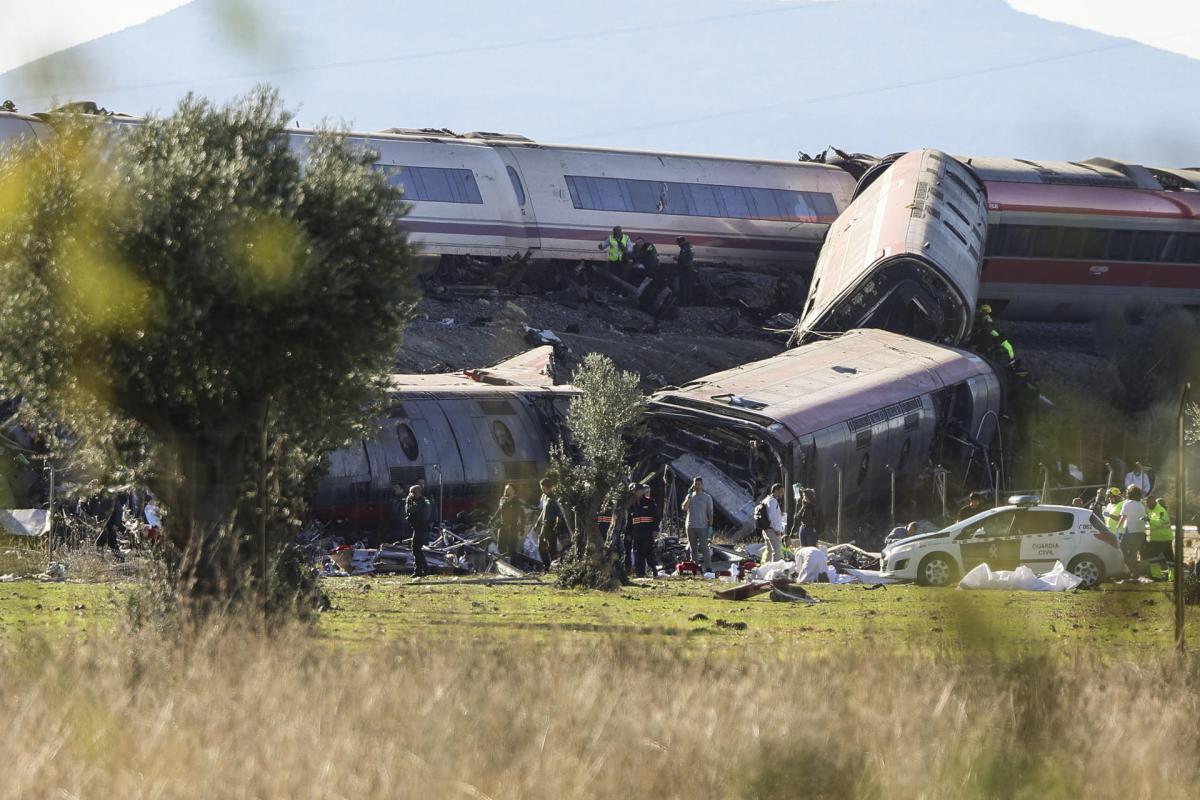
The train accidents in Adamuz and Toledo have different immediate causes. Precisely because of this, the debate must go beyond seeking a single culprit. The safety of critical infrastructure depends on a chain of decisions: maintenance, investment, supervision, protocols, coordination, and the ability to anticipate failures. When tragedies occur within the same system, it is legitimate to examine how risk is managed and whether the controls fulfill their function.
This is not a matter of bad luck. Nor is it enough to invoke human error. A prepared organization must consider the possibility that someone will make a mistake and have barriers capable of preventing that error from ending in catastrophe. Prevention exists precisely for that purpose.
Many now insist on the need to look beyond the day of the accident and examine the accumulated decisions that can create the conditions for a tragedy. That perspective should guide any serious investigation: to check what was known, what was done, what was left undone, and who had the obligation to act.
Current technology allows for detecting anomalies, automating controls, and anticipating certain problems. Artificial intelligence will further expand these possibilities. However, no machine can fully compensate for a deficient organization, insufficient supervision, or leadership incapable of setting priorities. The more complex the system, the greater the rigor required of those who manage it.
Risk does not disappear because we have more technology. It is reduced when we know how to organize, maintain, and use it prudently.
Óscar Puente has refused to resign and defends the need to investigate what happened. Investigating is essential, but the investigation cannot become a sufficient response to all questions regarding political management.
Criminal responsibility determines specific behaviors according to the law. Political responsibility also includes supervision, planning, budget priorities, and the ability to guarantee that systems under a ministry’s authority operate under proper safety conditions.
A minister does not have to have personally made an operational error to be accountable for the management of their department. They must explain what controls existed, what information they received, what measures they adopted, and what guarantees they can offer citizens. If serious deficiencies within their competencies are proven, continuity in the position deserves a real political evaluation, not an automatic defense.
The same demand should apply to other officials with responsibilities over infrastructure, operation, and supervision. It is not about calling for resignations indiscriminately but about preventing responsibility from being diluted among agencies, departments, and administrative levels until no one is accountable for the outcome.
If those managing a system did not detect foreseeable risks, ignored warnings, or failed to guarantee the required controls, they must explain why it happened and assume the appropriate consequences. If they lack the necessary capacity to correct the deficiencies, they should also consider whether they are the right people to continue leading their responsibilities.
The problem goes beyond the Ministry of Transport. Spain needs leaders capable of managing infrastructure, health care, energy, housing, and public services in a context of increasing technological and economic complexity.
However, much of political activity seems focused on defending positions, responding to opponents, and preparing the next electoral campaign. The debate about who gains a partisan advantage often occupies more space than evaluating results and planning long-term.
Knowing how to distribute funds and resources is a necessary but insufficient competence. It is necessary to determine where they are needed, establish priorities, select prepared teams, control implementation, measure results, and correct deficiencies. The budget is a management tool, not a guarantee of good management.
A competent leader is not necessarily the one who speaks the most or best defends their position in front of cameras. It is the one who understands the problems, makes informed decisions, listens to specialists, identifies risks, and is accountable for results. In critical infrastructure, these capabilities are not optional.
It is also not enough to appoint technically qualified professionals if the organization lacks independent controls or if decisions are subordinated to interests unrelated to safety. Competence must be present in people, procedures, and the institution’s culture.
Citizens cannot demand that a ruler be infallible. They can demand preparation, foresight, transparency, and accountability. And they can demand that the highest positions be held by people capable of exercising them, not simply retaining them. And that is why many resignations are rightly being demanded today.
Two accidents alone do not prove a common cause nor allow the assertion that all responsible parties have failed in their duties. It is necessary to investigate each case and verify the facts. But it would also be unreasonable to use that caution to avoid any examination of the system’s management capacity.
The question is whether institutions are prepared to anticipate risks, detect warning signs, and act before irreversible consequences occur. If the answer is no, organization, investments, controls, and responsibilities must be reviewed.
We cannot normalize prevention only gaining prominence after a tragedy. Nor accept that accountability is reduced to appearances, promises of improvement, and partisan arguments.
Technology advances. Complexity increases. That is why we need better managers, more rigorous institutions, and public officials willing to recognize their limits. When management fails seriously, resignation can be a legitimate and necessary consequence, not a humiliation nor a premature judicial sentence.
Governing is not occupying a position, managing budgets, or obtaining votes. It is assuming responsibility that the systems on which people’s lives depend function safely.
If those with that responsibility do not know how to anticipate risks, organize resources, and guarantee controls, the problem does not end with the accident. It remains in the system, waiting for the next opportunity to manifest.
And that is truly unacceptable: that citizens must entrust their safety to a management structure whose capacity to prevent, control, and respond is only tested when it is already too late.