The surprising Basque toast that becomes a delicious snack
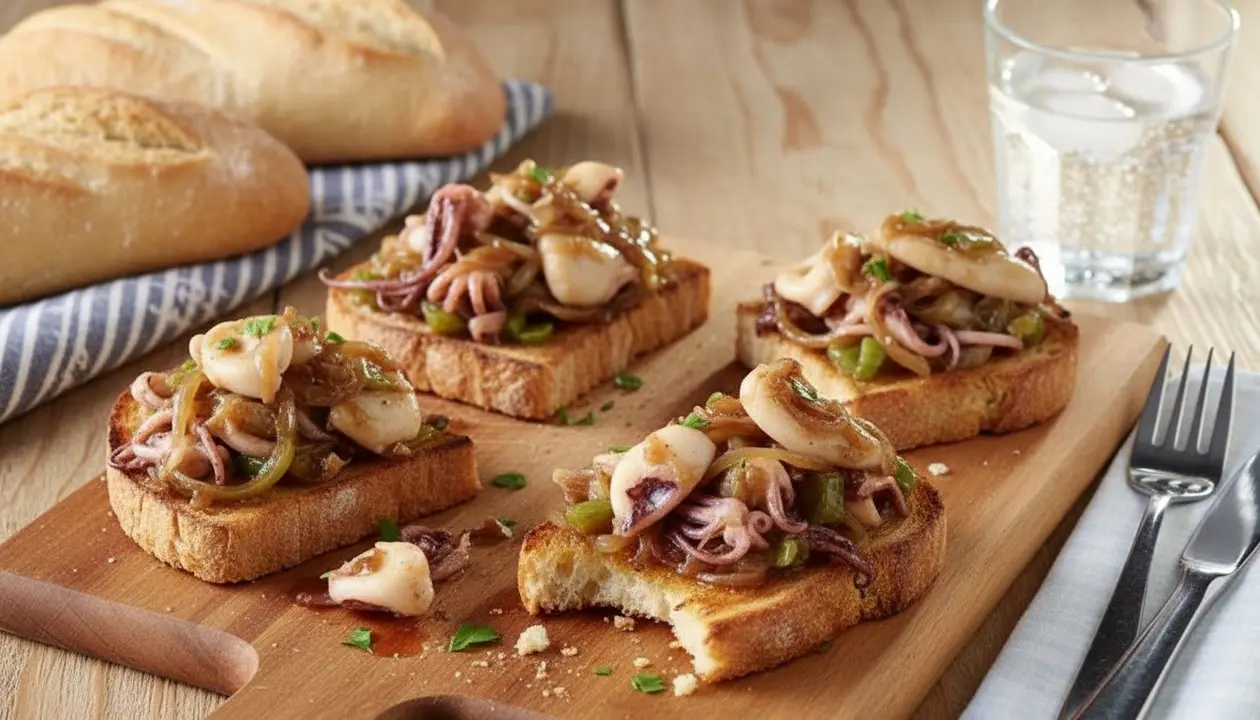

The key is to transform the grilled baby squid into a contrasting toast: golden bread, sautéed onion, green pepper, and a brief finishing touch in the oven. The proposal is published in Directo al Paladar and adapts the well-known Pelayo-style baby squid into a savory snack format, with a juicy, aromatic combination that’s easy to eat with your hands. The result aims to recharge energy in the late afternoon without necessarily resorting to a sweet bite.
The idea that transforms a snack
Why does this savory format work?
For those who usually arrive at dinner very hungry, a toast of this kind offers another route: a base of bread, cooked vegetables, and a seafood product that provides a texture both firm and tender at the same time. It’s not a simple sandwich. The charm lies in each layer maintaining its own personality and, when biting, the sweetness of the onion, the green aroma of the pepper, and the clean flavor of the baby squid blend together.
The source presents this preparation as a snack rich in protein and low in fat. That description fits the indicated method: grilling for the main ingredients, a small amount of raw oil at the end, and a short pass through the oven. The rustic bread adds the crunchy sound that prevents the experience from feeling soft or monotonous.
The connection to Pelayo-style baby squid
The combination takes as a reference the famous Pelayo-style baby squid, a dish considered typical of the Basque Country and of somewhat uncertain origin. The adaptation doesn’t try to compete with the main course format: it reduces it to a piece of toasted bread that concentrates its most recognizable elements.
That change in scale matters. In a snack or a pintxo, proportion determines balance: the onion must not overshadow the seafood, the pepper must accompany, and the bread must support the whole without dominating it. Small, yes; bland, no way.
Precise ingredients and preparation
What quantities does the source indicate?
The original information does not specify weights in grams or milliliters for all ingredients, so it is advisable to respect their domestic measures without inventing numbers. The quantity adjusts according to the number of toasts you want to prepare.
- 1 large onion or 2 small onions.
- Green peppers cut into strips, in the amount necessary to cover the toasts.
- Cleaned baby squid, opened lengthwise, a few depending on the units prepared.
- 1 slice of rustic bread per toast.
- 1 tablespoon of sautéed onion per unit.
- A drizzle of extra virgin olive oil, raw.
The absence of exact weights is no minor detail: here the useful reference is visual proportion. Each slice needs a recognizable layer of onion, some pepper strips, and a baby squid crowning the surface. If the toast is overloaded, the bread loses its function, and the bite becomes hard to hold.
How to prepare without losing texture?
First, the onion is sautéed over low heat until very tender and glossy. The source does not specify an exact time or temperature, so the point must be checked by the senses: the pieces have to look soft, moist, and slightly golden, without burnt edges. This slow cooking concentrates its sweetness and creates a creamy base.
Then the green peppers cut into strips are grilled. They must be cooked and aromatic, with a marked surface and a texture that still allows them to be distinguished when bitten. The sound of the grill and the toasted vegetal smell serve as practical signals; they shouldn’t be left until they turn into a paste.
The baby squid, already cleaned and opened lengthwise, are grilled separately. The source does not specify minutes or degrees, so control must be visual and tactile: opaque surface, slightly marked edges, and firm meat, but not dry. Separating them from the onion and pepper helps each ingredient keep its point.
One slice of rustic bread is toasted per unit. When the surface is golden and resistant to pressing, a spoonful of onion is placed on top, then the pepper, and lastly the baby squid. The assembly is done in this order because the onion works as a moist base and the seafood is exposed, with its aroma more perceptible.
To finish, a drizzle of raw extra virgin olive oil is added, and the toasts go into the oven for 2 minutes at high power or under the broiler. The source does not provide an exact temperature in °C or °F, so the criterion is observing the finish: the top must heat up and take a slight golden tone, without the bread darkening too much or the baby squid losing juiciness.
How to serve it to make it stand out
The serving point makes the difference
These toasts are served just out of the oven finishing, when the bread still crunches and the oil perfumes the surface. The ideal contrast appears between the toasted base, the soft onion, the pepper with bite, and the warm baby squid. If they rest too long, the juice from the upper layers softens the bread and part of the initial appeal is lost.
For a snack, a simple presentation is enough: units lined up on a dish and separated from each other so they can be picked up without falling apart. They also work as pintxos, as the source suggests, as long as each piece is a manageable size. The color helps stimulate appetite: golden bread, shiny onion, intense green, and the light tone of the baby squid form a recognizable and appetizing set.
What changes are reasonable?
The most natural substitution is to adjust the bread size to the number of diners, without altering the layer logic. It is also possible to prepare a smaller toast to serve as an appetizer or a larger slice if a more filling snack is desired. The source does not suggest specific ingredient changes, so it is advisable to keep the original combination to maintain its identity.
The onion and pepper can be cooked in advance, but assembly and the final pass through the oven should be done close to serving time. The baby squid, however, loses quality if it waits too long already cooked. The best texture is at immediate service when the bread surface remains dry and crunchy and the interior keeps the heat from the grill.
There is a technical reason not to prolong the gratin: those final 2 minutes should only join the layers and heat the whole. Excessive exposure would harden the baby squid and darken the bread. The broiler is a finish, not a full second cooking.
The reality is that this preparation works because it concentrates several stimuli in a single piece: the initial crunch, the perfume of the oil, the sweetness of the onion, the marked pepper, and the juicy texture of the baby squid. **A hot, savory, and aromatic toast,** designed to be eaten freshly made, turns a Basque reference into a simple snack with pintxo appearance and its own character.
Frequently Asked Questions
- What are Pelayo-style baby squid?
- They are a preparation associated with Basque cuisine combining baby squid with onion and pepper. In this version, they are presented on toasted bread as a snack or pintxo.
- How long do the toasts stay in the oven?
- The source indicates a finish of 2 minutes at high power or under the broiler. Since no specific degrees are given, they must be removed when hot and lightly golden.
- Can this snack be prepared in advance?
- The onion and pepper can be prepared ahead, but it’s advisable to cook the baby squid, assemble the toasts, and gratin them just before serving to keep the bread crunchy.